Proposed Architectural Guideline for Instantiating Virtual Human Beings with AI Technologies Across Time
Supersedes: v1.1 (2026-05-14) and v2.0 (2026-05-30)
Revised 2026-07-04: Appendices A and B added inline — the complete emotion vocabulary, expanded by the author from 193 to 220 entries, with per-word working definitions. Appendix A of this document is now the canonical vocabulary. Minor clarifications: @CHAIN precedence, BECOME-link side resolution, the intensity-split entries, and removal of the unused DO chain verb.
Revised 2026-07-07: Appendix C added — the lived record of a running instance, the Individuation Index, the Independence Point, consolidation, the save rule, and a pause provision. The author value
instance is registered in the reserved words of Part II, and instance-authored statements receive self-authority protection in Contract 2. The theoretical basis of the affect subsystem (Barrett, Solms) is restated in plain language.
Foreword
This document specifies a long-horizon platform for capturing, modeling, and re-instantiating an individual human being as a running approximation across changing generations of artificial intelligence. The word approximation is chosen with care. The platform does not claim to resurrect a person. It claims to construct a model of a person at the highest fidelity the available data and technology allow, and to keep that model portable as both improve.
The specification serves three readers at once, and every section is written for all three:
- A person, who should understand it on first-to-multiple pass, in plain language.
- An AI system, which should be able to parse it as input without ambiguity.
- A code generator, which should be able to produce working software from the contracts in Part IV without guessing.
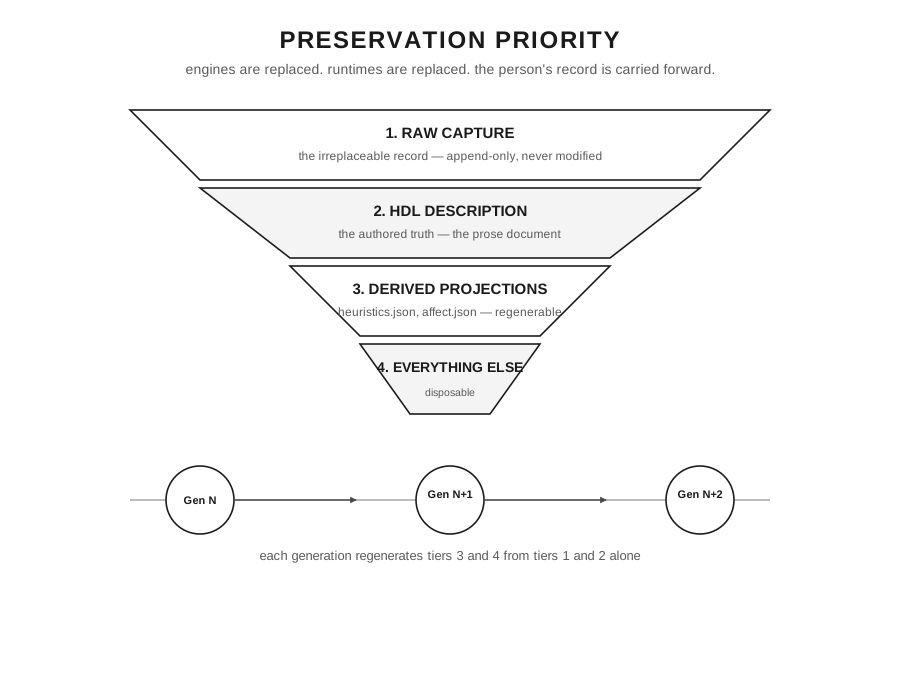
The platform is designed for a twenty-year operational horizon without intentional obsolescence. Its single most important rule: the raw captured material and the subject's description outlive everything else. Engines will be replaced. Runtimes will be replaced. The person's data and description are carried forward.
Part I — The Architecture in Six Layers
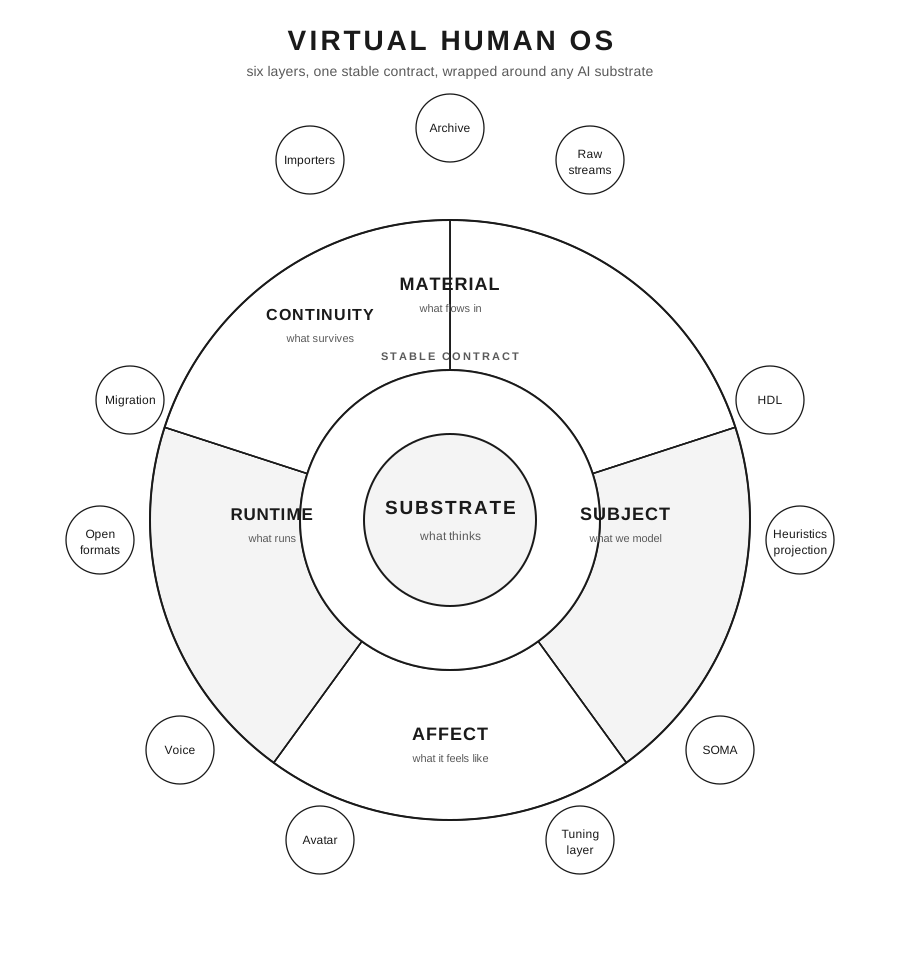
The Virtual Human OS is a generic operating system for capturing data about one or more human subjects, processing that data, and running an approximation of those subjects with as much fidelity as the data and technology of the day allow. It wraps current and future AI systems behind a stable, versioned contract so that the person's model never depends on any one engine or vendor.
The whole system is six layers. Each has one job. Each is separated from its neighbors by a stable, versioned contract.
CONTINUITY — what survives — preservation and migration across decades
MATERIAL — what flows in — captured data, raw forever
SUBJECT — what we model — the person, described in HDL (Human Descriptive Language - Robust)
AFFECT — what it feels like — constructed feeling, tuned to one person
RUNTIME — what runs — the living approximation and its embodiments
SUBSTRATE — what thinks — this generation's AI engine, behind a stable contract
Core principles
| Principle | Plain meaning |
|---|---|
| Substrate independence | The subject model is never welded to any one AI engine. |
| Open, durable formats | Anything captured stays readable after its capturing tools are gone. Plain text, open codecs, documented schemas. |
| Raw material is sacred | Original data is never modified or destroyed. Derived models are regenerated; raw streams are not. |
| Versioned contracts | Every boundary between layers is a stable, versioned interface. Additive change only within a major version. |
| Affect-first modeling | The feeling subsystem is foundational, not decorative. It sits beneath the personal model, as it does in a living person. |
| Provenance everywhere | Every statement about the subject traces to its sources, its author, and a confidence value. |
| Honesty about the unverifiable | Where the platform cannot in principle confirm something — whether anything is actually felt — it says so plainly (Part VII). |
| Local-first by default | The subject's data lives on hardware the subject controls. Cloud services are optional accelerants, never custodians. (The 2024–2025 bankruptcy of a major legacy-avatar platform, with customer recordings caught inside it, is the cautionary tale — see Part VI.) |
SUBSTRATE — what thinks
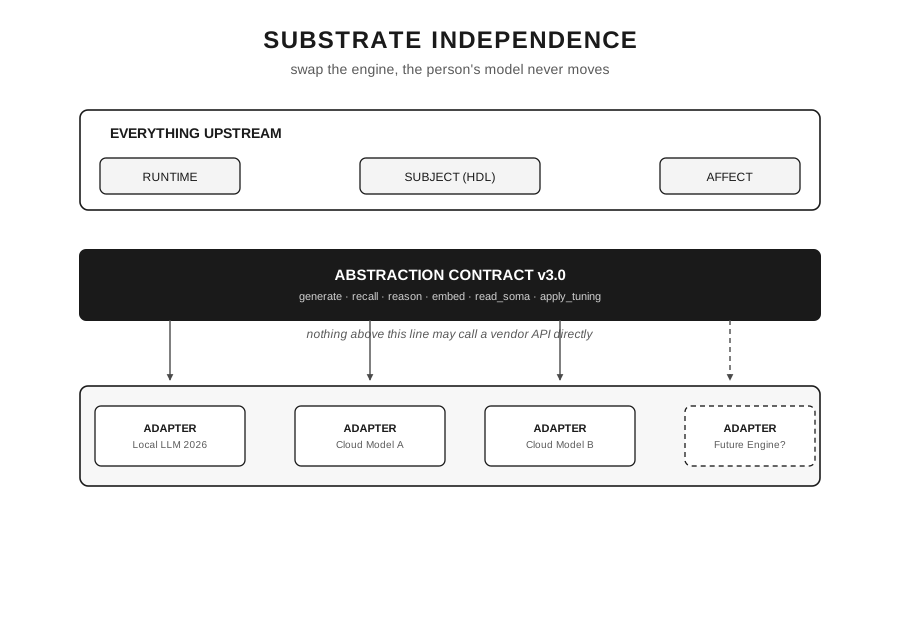
The substrate is the AI engine of the day: language generation, reasoning, recall, synthesis, perception, and cognitive functions not yet invented. It is intentionally swappable. Nothing above it may call a vendor API directly.
The substrate's only face to the rest of the system is the Abstraction Contract — a small, versioned, paradigm-independent vocabulary of cognitive operations ("recall this memory," "reason against this context," "generate language conditioned on this corpus"). Adapters translate between the contract and each engine's native API. New engines are added by writing a new adapter; nothing upstream changes. The contract is given in machine-readable form in Part IV.
AFFECT — what it feels like
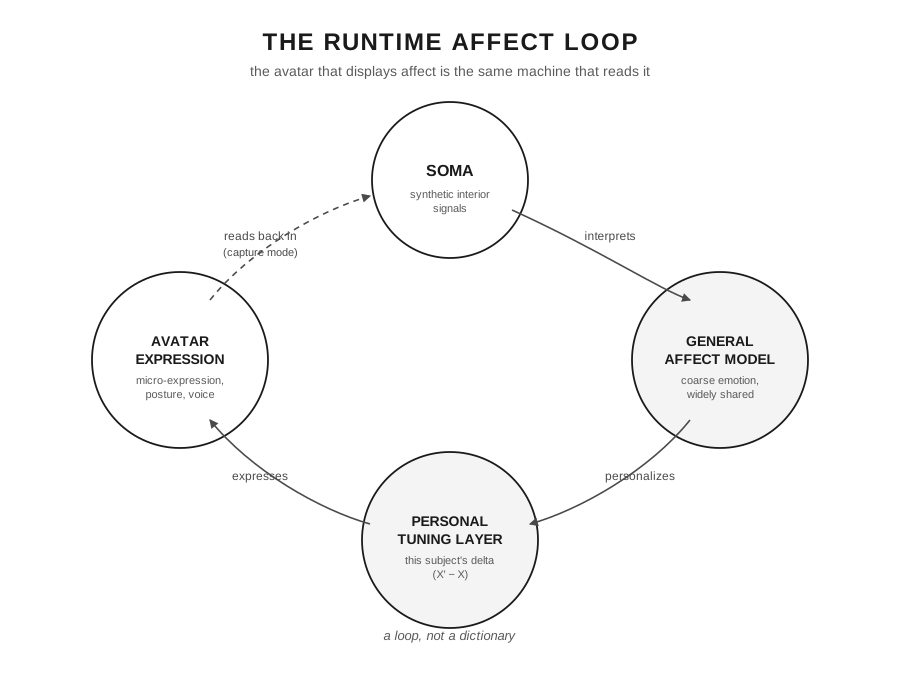
An AI core is cognition without an interior: it can parse, summarize, and reason about King Lear with nothing happening that a person would call grief. The AFFECT layer does not translate the core's understanding into feeling — there is nothing on the core's side to translate. It constructs feeling: it generates an affective state and feeds that state back into cognition, where it biases what the cognition does next. A loop, not a dictionary.
AFFECT has three components, stacked:
- SOMA — the simulated body. A set of synthetic interior signals — analogues of arousal, tension, fatigue, the autonomic weather — that the cognitive core is conditioned to read as its own bodily feedback and to treat as feeling rather than data. Because an AI's interior cannot be sensed directly, SOMA is calibrated from the outside: from the externalized signatures of a real body captured in MATERIAL. The face is the soma's billboard; the autonomic system is its hidden engine; both are partly observable from outside the skin, which is what makes calibration possible.
- The General Human Affect Model. The prior: core affect (broad valence and arousal) plus the coarse, widely shared signatures of emotion across faces, voices, postures, and word choice. Trainable from humanity at large — how frustration, awe, grief, or mirth generally read across many people.
- The Personal Tuning Layer. Learns the delta between what the general model predicts and how this specific subject actually behaves in known states. The general model says frustration looks like X. The subject's own paired data says: in me, frustration looks like X′ — drier, more likely to surface as a joke than a sharp word, with this particular tell. The tuning layer learns X′ minus X.
The theory behind the design
Two findings from affective science shape this subsystem. They are worth stating plainly before saying what they imply.
Barrett — the theory of constructed emotion [10]. The brain does not come with built-in emotion circuits; there is no dedicated anger circuit waiting to fire. What is innate is only core affect: raw feeling on two dials, pleasant–unpleasant and calm–activated. Everything else is construction. In the moment, the brain takes the raw signal plus the situation and, using emotion concepts learned from a culture and a life, builds the experience. Anger is a category a person learned, not a reflex they inherited — which is why emotion varies across cultures, and from one individual to the next.
Solms — the affect-first account of consciousness [11]. Consciousness does not begin in the smart part of the brain. It is generated deep in the ancient brainstem, and its original, fundamental form is feeling — the felt readout of homeostasis, the body asking how am I doing. Feeling is the foundation of the mind; thinking is a later story built on top. A creature can feel without thinking; it cannot think without feeling underneath.
Barrett is the reason for the general/personal split. A general model can supply core affect and the broad shared categories, and nothing more, because the construction step is individual. The Personal Tuning Layer is that step — one person’s learned concept repertoire running over core affect. That is what makes the affective fingerprint personal, and it is why the fingerprint can be learned from that person’s corpus at all: the concepts are in the writing.
Solms is the reason for the ordering. Feeling is the ground and cognition the upper story, so AFFECT sits beneath the SUBJECT layer rather than on top of it. The ordering copies the original.
The build-order gradient
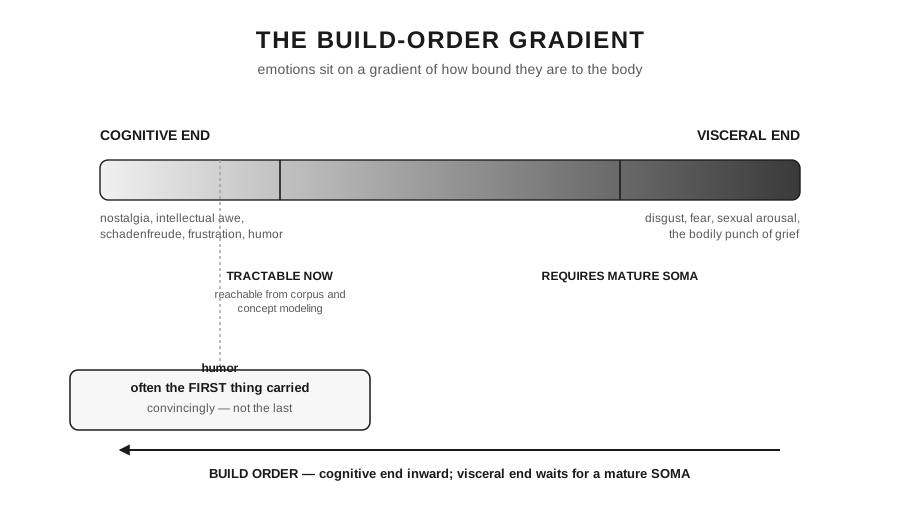
Emotions sit on a gradient of how bound they are to the body, and the gradient is the build order. At the visceral end — disgust, fear, sexual arousal, the bodily punch of grief — feeling is deeply somatic and hardest to construct without a mature SOMA. At the cognitive end — nostalgia, intellectual awe, the pleasure of an elegant proof, frustration, schadenfreude — feeling is mostly constructed concept over thin core affect, and is reachable now from corpus and concept modeling.
Humor sits encouragingly far toward the tractable end: mirth is affect triggered by a cognitive event — incongruity resolved. Practical consequence: the subject's humor, often among the most identifying things about a person, may be among the first things the subsystem carries convincingly, not the last. Build from the cognitive end inward; defer the visceral end until SOMA and the multimodal capture are mature.
SUBJECT — what we model
The SUBJECT layer is the person, described in the Human Description Language (HDL): a small domain-specific language for a subject's drives, social patterns, decision heuristics, self-narrative, and — new in this version — affective fingerprint. HDL is fully specified in Parts II and III. For architectural purposes it is a sealed unit: a stable language, parseable by any conforming compiler, durable across substrate generations.
MATERIAL — what flows in
MATERIAL ingests and preserves everything captured about the subject. Each stream type enters through a dedicated importer with a narrow, stable contract; the archive remains authoritative over every derived database or index; raw data is never destroyed.
| Stream | What it carries, in affective terms |
|---|---|
| Text corpus — journals, blogs, essays, email, chat logs | Labels. The subject's own account of what they were feeling in a given situation. Honest journals are the most valuable text the platform can hold. |
| Structured interviews — recorded life-story sessions | The single highest-leverage capture artifact known as of 2026: a two-hour interview outperforms demographic and persona profiles for simulating an individual [1]. Record it; transcribe it; keep both. |
| Video — micro-expressions, posture, gesture speed | The externalized soma. The surface readout of interior states, including the signal the composed self does not volunteer. |
| Biometric streams — heart rate and related autonomic measures, e.g. a smartwatch worn while filming | Underneath the face. A micro-expression can be performed; a heart-rate spike is far harder to fake. |
| Future inputs — e.g. high-resolution neuroimaging | Specified as future tiers, never current dependencies. The platform must work without them. A spec that overpromises its inputs rots. |
The synchronization requirement
Channels are only useful together if their clocks align. Capture sessions must record a shared clock across camera, biometric device, and (where possible) journal entry, so a moment in the video can be matched to the heart rate at that instant and to the subject's later written account of it. Time-synchronization is a hard requirement, not a convenience.
The triangulation principle
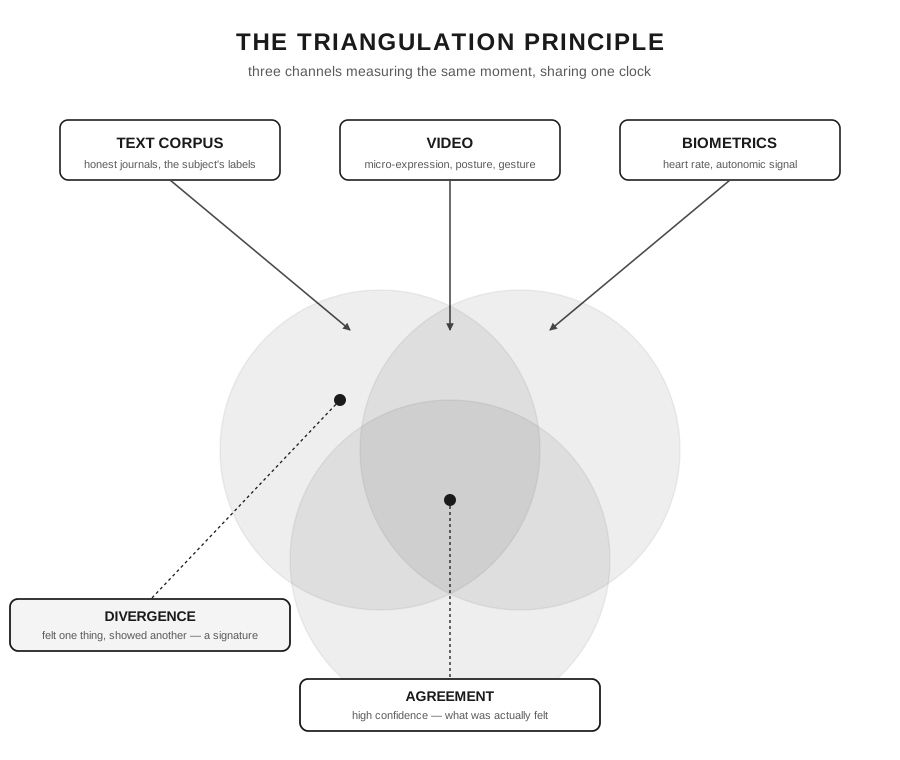
Three channels measuring the same moment give a structure no single channel provides:
- Where the honest journal, the involuntary micro-expression, and the autonomic signal agree, the platform has something close to a true label — high confidence about what was actually felt.
- Where they diverge, the platform has not found noise; it has found the moments the subject felt one thing and showed another — arguably more identifying than the aligned cases, and a deeply personal signature in their own right. The tuning layer treats divergence as a feature, not noise.
Honest caveat: no channel is ground truth alone. The journal is a report of feeling, filtered through how the subject narrates the self. Video is less mediated but ambiguous. Biometrics are real but coarse — arousal does not name its own cause. The value is in the triangulation, never in any single stream's authority.
RUNTIME — what runs
The RUNTIME brings a described subject to life through one or more embodiments: text interfaces, synthetic voice, video avatars, virtual and augmented reality, robotics, and concurrent multi-instance operation. It translates the subject's HDL description into substrate operations through the Abstraction Contract. Different runtimes may emphasize different aspects of the subject without modifying the underlying description.
The avatar is dual-purpose. Run forward, it is the output embodiment — the face and body through which the approximation expresses itself, with AFFECT driving micro-expression and posture rather than pasting them on. Run backward over the subject's archive, the same machinery is the instrument that recovers body signal — the analyzer that reads micro-expression and posture out of captured video to feed SOMA's calibration. The thing that displays affect and the thing that reads affect are the same machinery pointed in opposite directions.
The full runtime loop: SOMA generates raw interior signal → the General Affect Model interprets it into coarse emotion → the Personal Tuning Layer warps that into the subject's specific fingerprint → expression flows out through the avatar → and, during capture, the avatar analyzer reads real expression back in as data. A closed, coherent loop — and not one piece of it requires solving consciousness.
CONTINUITY — what survives
CONTINUITY ensures survivability across decades: migration between substrates, versioned contracts, open specifications, forward-compatible data structures, multi-language implementation support. Each generation of AI technology consumes the original captured material, reapplies updated processing, and re-instantiates the subject in newer systems.
Because the affective subsystem is calibrated from raw multimodal capture, the raw synchronized streams are part of the irreplaceable record. Derived affect models can be regenerated by better future methods only if the original streams survive. Preservation priority, in order: (1) raw capture, (2) the HDL description, (3) derived projections, (4) everything else. The RUNTIME may be replaced; the SUBSTRATE may be replaced; the subject's data and description are preserved and ported forward.
Part II — The Human Description Language (HDL)
HDL is a small language for describing the internal structure of one person: their values, their patterns of feeling and thinking, their characteristic ways of acting toward others, and the story they tell about themselves. The description serves as a stable input to AI systems that simulate the person across time.
Two design rules govern everything:
- Readable. Any reasonably literate person can read an HDL document and understand what it says about the subject on first pass.
- Parseable. An AI compiler can read the same document and produce a strict structured form without ambiguity.
The prose is the authored truth; the structured form (Part IV) is the derived projection used at runtime. Both carry the same provenance.
The four subject layers
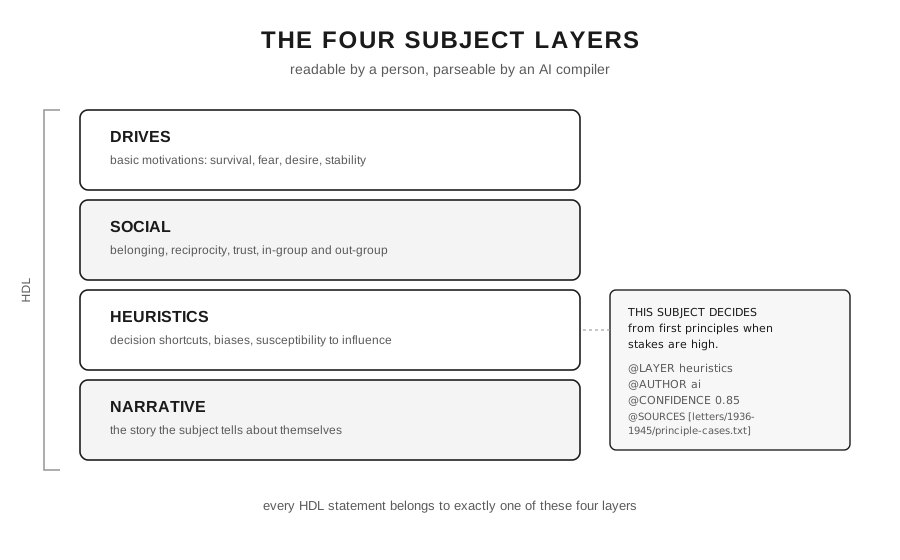
Every HDL statement belongs to exactly one layer:
| Layer | What it describes |
|---|---|
| Drives | Basic motivations — what the subject pursues, fears, and requires to feel stable. Survival, fear, desire, stability. |
| Social | How the subject relates to others — belonging, reciprocity, trust, altruism, in-group and out-group. |
| Heuristics | How the subject decides — reasoning shortcuts, biases, susceptibility to influence. |
| Narrative | The story the subject tells about themselves — identity, moral framing, how they make sense of their past. |
Note on qualia. Gender identity, sexual desire, and other deeply personal experiences are distributed across the layers where they express themselves — in Narrative as self-conception, in Social as relating, in Drives as motivation — rather than carved out as a separate layer. These four layers describe the subject; they are distinct from the four sides of the emotion vocabulary below, which describe where an emotion lives in experience.
The authoring model and the self-authority rule
HDL is dual-authored. The subject may write statements directly; these are authoritative. The AI compiler derives statements from captured material; these carry full provenance back to their sources. Both coexist in the same document, distinguished by @AUTHOR.
The self-authority rule: a statement authored by the subject is preserved as written. The compiler must not lower its confidence, modify it, or remove it. When evidence appears to contradict a subject-authored statement, the compiler leaves it unchanged and may add new, related-but-distinct statements (with their own sources and confidence) that refine the model without overruling the subject. The subject is the authority on their own identity; the compiler is the authority on what the evidence shows. Both voices remain visible. Neither overwrites the other.
Statement forms
A statement is one of three shapes, each followed by an annotation block.
Assertion — a stable trait, value, belief, or disposition:
THIS SUBJECT VALUES understanding nature deeply.
  @LAYER drives
  @AUTHOR ai
  @CONFIDENCE 0.95
  @SOURCES [writings/autobiographical-notes-1949.txt#para_3]
Conditional — a stimulus–response pattern:
WHEN THIS SUBJECT is interrupted mid-thought,
  they FEEL irritated weakly.
  @LAYER drives
  @AUTHOR self
  @CONFIDENCE 1.00
  @SOURCES [self-attestation/2026-06-09]
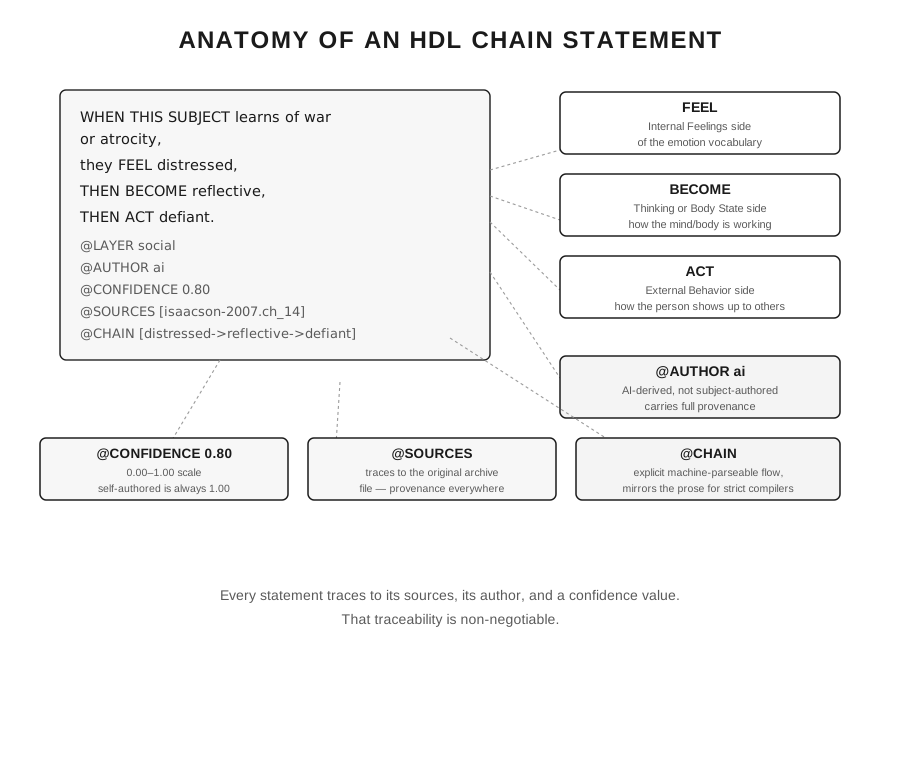
Chain — a blended sequence in which one inner state causes the next, across the sides of experience. The verb at each link signals which side that link inhabits: FEEL for Internal Feelings, BECOME for a Thinking or Body State, ACT for External Behavior:
WHEN THIS SUBJECT learns of war or atrocity,
  they FEEL distressed,
  THEN BECOME reflective,
  THEN ACT defiant.
  @LAYER social
  @AUTHOR ai
  @CONFIDENCE 0.80
  @SOURCES [biography/isaacson-2007.ch_14]
  @CHAIN [distressed -> reflective -> defiant]
Because BECOME covers two sides, the side of a BECOME link is resolved by the linked word's vocabulary mapping; a word that lives on both sides (alert, restless) contributes both.
Lines beginning with # are comments. Optional intensity modifiers (strongly, moderately, weakly, rarely, occasionally, always) follow the object of an assertion or the response of a conditional.
The verb set
The verb set is small and additive: a verb is added only when a workaround using existing verbs appears at least twice in real compilation output.
| Verb | Meaning | Typical layer |
|---|---|---|
VALUES | Holds as a core value or aspiration. | Drives / Social |
BELIEVES | Holds as a factual or moral conviction. | Narrative |
FEARS | Sustained aversion to. | Drives |
TRUSTS | Extends reliability or confidence to. | Social |
PREFERS | Leans toward in choice. | Heuristics |
DECIDES | Characteristic decision style. | Heuristics |
WEIGHS | Gives unusual weight to a consideration. | Heuristics |
DISCOUNTS | Habitually under-weights a consideration. | Heuristics |
ANCHORS_ON | Fixes initial estimates from a reference point. | Heuristics |
DEFAULTS_TO | When uncertain, falls back to a stance or action. | Heuristics |
IS_SWAYED_BY | Susceptibility to a channel of influence. | Heuristics |
RESISTS | Habitually pushes back against a kind of pressure. | Heuristics |
FRAMES | Self-narrative about self, others, or the world. | Narrative |
HOPES | Forward-directed aspiration. | Narrative / Drives |
IDENTIFIES_AS | Self-applied role, label, or identity. | Narrative |
REJECTS | Explicitly disavows a position or framing. | Narrative / Social |
The chain-form verbs FEEL, BECOME, ACT appear only inside conditional and chain forms, never as standalone assertions.
The annotation block
Every statement is followed by an indented annotation block, one tag per line, in any order. The first four are required.
| Tag | Required | Meaning |
|---|---|---|
@LAYER | yes | drives | social | heuristics | narrative |
@AUTHOR | yes | self | ai | instance:<id> |
@CONFIDENCE | yes | 0.00–1.00. Subject-authored statements are conventionally 1.00. |
@SOURCES | yes | List of source-pointers: relative paths with optional fragment, e.g. journal/2024-11-02.txt#para_3. self-attestation/<date> is the canonical pointer for statements the subject wrote directly. |
@CHAIN | no | Explicit chain flow for compilers that prefer not to parse prose. The prose statement is authoritative: if the two disagree, a conforming compiler reports an error rather than silently preferring either form. |
@AS_OF | no | When the claim was first true or last confirmed; supports temporal modeling (a value held at twenty-five may differ from one held at sixty-five). |
@AFFECT | no | (new in v3.0) Links the statement to entries in the subject's AFFECT_FINGERPRINT (Part III). |
@NOTE, @REVIEWED | no | Free commentary; review trail. |
The Heuristics layer: two synchronized forms
Drives, Social, and Narrative live naturally in prose. Heuristics — the characteristic shortcuts of a mind — are awkward in prose at simulator precision and awkward in pure numbers at human-reviewer texture. So the Heuristics layer travels in two equivalent forms: the prose form (the authored truth, same grammar as everything else) and a derived projection in a small structured vocabulary the runtime consumes directly. The compiler keeps both in sync; the same provenance rules govern both. The projection is the only place in HDL where numbers are first-class.
The projection has three slot families, each slot carrying a value in [0.0, 1.0] (or a qualitative token where the evidence doesn't support calibration) plus a confidence:
| Family | Slots |
|---|---|
| decision_style (axes, low→high) | deliberation impulsive→deliberate · intuition_vs_analysis intuitive→analytical · risk_tolerance averse→seeking · novelty_appetite familiar→novel · horizon short→long · granularity detail-first→pattern-first · consensus_orientation contrarian→consensus |
| biases (strength) | availability · anchoring · recency · narrative · authority · in_group · sunk_cost · confirmation |
| influence_susceptibility (strength) | emotional_appeal · repetition · social_proof · scarcity_urgency · authority_signaling · visual_vs_textual |
Each prose verb maps to projection slots via a published mapping table maintained alongside the vocabulary — for example, DECIDES from first principles raises intuition_vs_analysis toward analytical and raises deliberation; RESISTS a pressure source lowers that influence channel. Intensity modifiers translate to discrete deltas tuned per compiler version. A reviewer can always retrace any projection value to the prose statements that produced it, and from there to the sources. That traceability is non-negotiable.
The emotion vocabulary
HDL prose references emotion words in FEEL responses and chain forms. These resolve against a versioned vocabulary (currently v0.2, 220 entries). The vocabulary organizes emotion by four plain-language sides — the same word may live on more than one side at once, because most emotions are blended: a person who is anxious is feeling something, thinking something, and bracing physically, all at once.
| Side | What it covers | Categories |
|---|---|---|
| Internal Feelings | What is felt inside. | high-energy uplifting · high-energy distressing · low-energy uplifting · low-energy distressing |
| Body States | What the body is doing. | activated · drained |
| Thinking States | How the mind is working right now. | disrupted · engaged · overloaded · self-focused |
| External Behavior | How the person shows up to others. | withdrawing · asserting · welcoming · yielding |
The complete canonical vocabulary appears in Appendix A, one entry per word with its side and category mappings — a form both a reader and a code generator can consume. Per-word working definitions appear in Appendix B. Appendix A of this document is the canonical vocabulary: any machine-readable vocabulary file is generated from the appendix, never the other way around. New words may be added in any minor version; existing mappings are never removed or repurposed; subject-specific additions live in a parallel file referenced from the document header and never pollute the shared vocabulary.
Worked example — a historical figure
A historical subject is the natural first instantiation: bounded, public source material; the subject's own writings standing in for @AUTHOR self; contemporary writings standing in for @AUTHOR ai — the full grammar exercised end to end with no consent questions. (Independent research has validated exactly this approach: trainable simulacra of historical figures built from collected writings and records [5].) The example is deliberately compact.
HDL_VERSION 0.4
SUBJECT_ID "albert_einstein"
PRIMARY_AUTHOR_MODE ai
LAST_COMPILED 2026-06-09

# === Drives ===
THIS SUBJECT VALUES understanding nature deeply.
  @LAYER drives  @AUTHOR ai  @CONFIDENCE 0.95
  @SOURCES [writings/autobiographical-notes-1949.txt#para_3]

# === Social ===
THIS SUBJECT REJECTS militarism as a path to human security.
  @LAYER social  @AUTHOR ai  @CONFIDENCE 0.92
  @SOURCES [correspondence/einstein-freud-why-war-1933.txt,
            statements/manifesto-to-europeans-1914.txt]

# === Heuristics ===
THIS SUBJECT DECIDES from first principles when stakes are high.
  @LAYER heuristics  @AUTHOR ai  @CONFIDENCE 0.85
  @SOURCES [letters/1936-1945/principle-cases.txt]
THIS SUBJECT WEIGHS internal coherence strongly.
  @LAYER heuristics  @AUTHOR ai  @CONFIDENCE 0.90
  @SOURCES [essay/physics-and-reality-1936.txt]

# === Narrative ===
THIS SUBJECT IDENTIFIES_AS a pacifist by conviction.
  @LAYER narrative  @AUTHOR ai  @CONFIDENCE 0.90
  @SOURCES [interview/the-nation-1931.txt#para_4]
THIS SUBJECT BELIEVES the universe is comprehensible by reason.
  @LAYER narrative  @AUTHOR ai  @CONFIDENCE 0.93
  @SOURCES [essay/physics-and-reality-1936.txt#section_1]

# === Conditional and chain ===
WHEN THIS SUBJECT learns of war or atrocity,
  they FEEL distressed,
  THEN BECOME reflective,
  THEN ACT defiant.
  @LAYER social  @AUTHOR ai  @CONFIDENCE 0.80
  @SOURCES [biography/isaacson-2007.ch_14]
  @CHAIN [distressed -> reflective -> defiant]

# === Derived projection (Heuristics layer) ===
HEURISTICS_PROJECTION subject_id="albert_einstein"
  decision_style:
    deliberation:           0.85  @CONFIDENCE 0.82
    intuition_vs_analysis:  0.60  @CONFIDENCE 0.80
    novelty_appetite:       0.80  @CONFIDENCE 0.78
    horizon:                long  @CONFIDENCE 0.88
    granularity:            pattern-first  @CONFIDENCE 0.90
    consensus_orientation:  0.20  @CONFIDENCE 0.85
  biases:
    narrative:    0.55  @CONFIDENCE 0.70
    authority:    0.20  @CONFIDENCE 0.80
  influence_susceptibility:
    emotional_appeal:    0.30  @CONFIDENCE 0.72
    authority_signaling: 0.20  @CONFIDENCE 0.78
Reserved words
Header keywords: HDL_VERSION, SUBJECT_ID, PRIMARY_AUTHOR_MODE, LAST_COMPILED, VOCABULARY_NAME, VOCABULARY_VERSION, LAST_UPDATED. Statement keywords: THIS SUBJECT, WHEN, THEN. Assertion verbs: the sixteen in the verb table. Chain verbs: FEEL, BECOME, ACT. Intensity modifiers: strongly, moderately, weakly, rarely, occasionally, always. Annotation tags: @LAYER, @AUTHOR, @CONFIDENCE, @SOURCES, @NOTE, @REVIEWED, @CHAIN, @AS_OF, @AFFECT. Layer values: drives, social, heuristics, narrative. Author values: self, ai, instance, other:<id>. Projection keywords: HEURISTICS_PROJECTION, AFFECT_FINGERPRINT, decision_style, biases, influence_susceptibility.
Part III — The Affective Fingerprint in HDL
This part closes the open fork left by v2.0: HDL is now affect-aware. The biographical and cognitive HDL of Part II remains the base; the affective dimension is what makes the described subject a particular person rather than a competent generic human. It is carried in one new top-level block, AFFECT_FINGERPRINT, which — like the heuristics projection — is a derived structured form, compiled from MATERIAL with full provenance, reviewable by the subject, and never authoritative over subject-authored prose.
The block has four sections:
| Section | What it holds | Compiled from |
|---|---|---|
concept_repertoire | The subject's personal emotion categories [10]: which vocabulary words they actually use of themselves, how finely they differentiate, under what triggers. May reference subject-specific vocabulary additions. | Text corpus, especially journals. |
tuning_deltas | The X′-minus-X corrections the Personal Tuning Layer has learned over the General Affect Model, per emotion and per context. | Synchronized capture sessions. |
divergence_map | The characteristic ways this subject's shown affect departs from felt affect — the felt-one-thing-showed-another signatures from triangulation. | Journal vs. video vs. biometrics. |
soma_calibration | How this particular body's external signatures map back to SOMA's synthetic interior signals. | Video + biometric streams. |
A compact illustrative fragment:
AFFECT_FINGERPRINT subject_id="albert_einstein"
  concept_repertoire:
    frequent: [reflective, amused, defiant, serene, troubled]
    fine_distinctions: [troubled vs. distressed]   @CONFIDENCE 0.62
  tuning_deltas:
    frustrated:
      general: "sharp word, raised voice"
      personal: "dry joke, subject change"          @CONFIDENCE 0.70
      @SOURCES [sessions/2026-03-11/, journal/2026-03-11.md#para_2]
  divergence_map:
    - felt: anxious  shown: calm
      context: "public speaking"                    @CONFIDENCE 0.55
      @SOURCES [sessions/2026-04-02/]
  soma_calibration:
    arousal_baseline_hr: 58
    arousal_spike_tell: "jaw set before voice changes"  @CONFIDENCE 0.48
Prose statements may point into this block with the @AFFECT annotation, so a chain like feels anxious → becomes self-conscious → acts shy can carry the specific tuning data that makes the chain run in this subject's particular way.
Part IV — Machine-Readable Contracts
This part exists so that code can be generated from the specification without guessing. Three contracts: the archive layout, the data schemas, and the substrate interface. Prose remains the authored truth; these are its derived projections, versioned with the spec.
Contract 1 — the archive layout
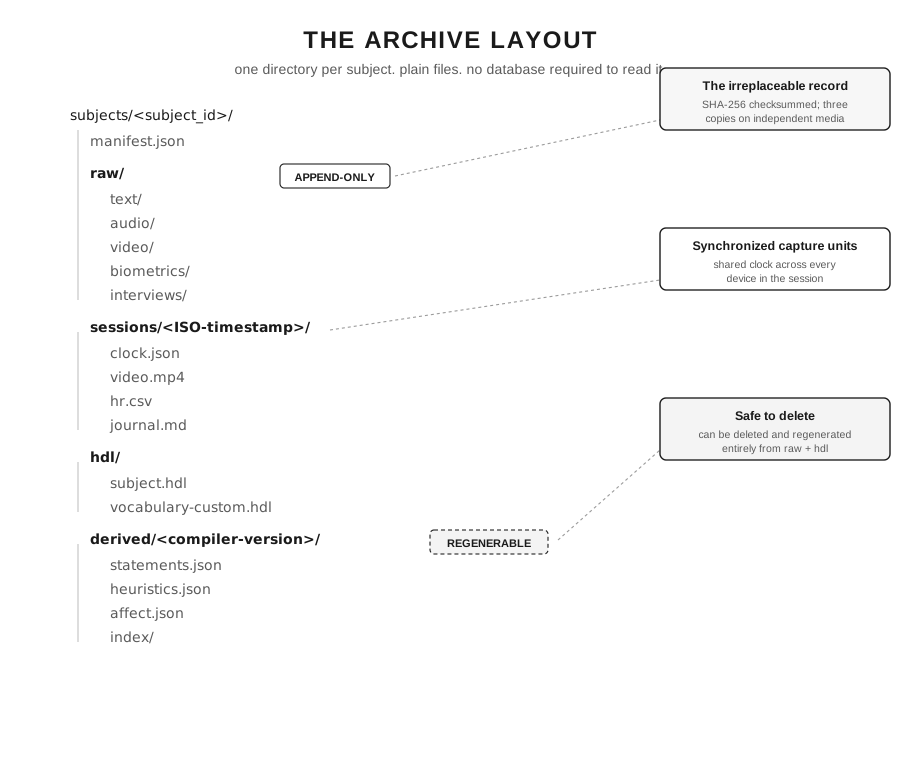
One directory per subject. Plain files, open formats, no database required to read it. The raw/ tree is append-only and never modified; everything under derived/ can be deleted and regenerated.
subjects/<subject_id>/
  manifest.json            # spec version, checksums, inventory
  raw/                     # APPEND-ONLY. The irreplaceable record.
    text/                  #   journals (.md), email, posts, chat exports
    audio/                 #   interviews, voice memos (.flac/.wav + .txt transcript)
    video/                 #   capture sessions (.mp4/open codec)
    biometrics/            #   heart rate etc. (.csv: utc_timestamp,metric,value)
    interviews/             #   life-story interview recordings + transcripts
  sessions/<ISO-timestamp>/  # SYNCHRONIZED capture units
    clock.json             #   shared-clock offsets for every device in session
    video.mp4
    hr.csv
    journal.md             #   subject's later written account, timestamped
  hdl/
    subject.hdl            # the prose document. The authored truth.
    vocabulary-custom.hdl  # subject-specific emotion additions (optional)
  derived/<compiler-version>/
    statements.json        # compiled HDL statements (schema below)
    heuristics.json        # heuristics projection
    affect.json            # affect fingerprint
    index/                 # embeddings, search indexes — all regenerable
manifest.json records the spec version, a checksum (SHA-256) for every file under raw/ and sessions/, and the compiler version of each derived tree. Three copies of raw/, sessions/, and hdl/ on independent media is the minimum preservation posture.
Contract 2 — the data schemas
A compiled HDL statement, as JSON (the canonical interchange form between compiler and runtime):
{
  "$schema": "vhos/3.0/statement",
  "subject_id": "string",
  "form": "assertion | conditional | chain",
  "verb": "VALUES | BELIEVES | FEARS | TRUSTS | PREFERS | DECIDES |
           WEIGHS | DISCOUNTS | ANCHORS_ON | DEFAULTS_TO |
           IS_SWAYED_BY | RESISTS | FRAMES | HOPES |
           IDENTIFIES_AS | REJECTS",
  "object": "string (free text)",
  "stimulus": "string | null        // conditional and chain forms",
  "chain": ["emotion-word", "..."]  ,
  "chain_sides": ["feel | become | act", "..."],
  "intensity": "strongly | moderately | weakly |
                rarely | occasionally | always | null",
  "layer": "drives | social | heuristics | narrative",
  "author": "self | ai | instance | other:<id>",
  "confidence": 0.0,
  "sources": ["relative/path.ext#fragment", "..."],
  "as_of": "ISO-8601 date | null",
  "affect_refs": ["fingerprint-entry-id", "..."],
  "note": "string | null",
  "reviewed": "ISO-8601 date | null"
}
The heuristics projection and affect fingerprint serialize as in Parts II–III: every leaf value pairs with a confidence, and every section carries sources reachable through its metadata. Validation rules a generator must enforce: confidence in [0,1]; layer, author, verb, intensity drawn only from the reserved-word sets; chain words resolving against the vocabulary file or the subject's custom additions; for the two intensity-split vocabulary entries (ashamed, unhappy), the low-intensity mapping applies only when the statement carries a weakening modifier (weakly, rarely), otherwise the high-intensity mapping; statements with author=self or author=instance immutable to the compiler (the self-authority rule, enforced in code — extended by Appendix C to the instance's own testimony).
Contract 3 — the substrate interface
The Abstraction Contract, as the minimal interface every adapter implements. Paradigm-independent; deliberately small; versioned; additive-only within a major version.
interface Substrate {                       // Abstraction Contract v3.0
  capabilities() -> CapabilityReport        // versions, modalities, limits

  generate(prompt: Text,
           corpus: SourceRefs,              // grounding material
           persona: StatementSet,           // compiled HDL statements
           affect: AffectState | null,      // current constructed state
           params: GenParams) -> Text

  recall(query: Text, scope: SourceRefs) -> Passages   // retrieval
  reason(context: Text, question: Text) -> {conclusion, rationale}
  embed(text: Text) -> Vector

  // AFFECT support (optional capability; report via capabilities())
  read_soma(signals: SomaState) -> CoarseAffect        // general model
  apply_tuning(coarse: CoarseAffect,
               fingerprint: AffectFingerprint) -> AffectState
}
An adapter for a 2026-era local language model implements generate, recall, reason, and embed trivially; the two affect calls may return unsupported until the AFFECT components exist. Nothing upstream breaks. That is the point of the contract.
Part V — Building It: A Practical Path
This part turns the architecture into a sequence a single person can begin today. The stages are ordered by leverage: each produces something usable on its own, and the earliest stages need no code at all. The evidence from the field (Part VI) shapes the order — in particular, the finding that a recorded two-hour life-story interview is currently the highest-value single artifact for simulating an individual [1].
Stage 0 — accumulate the data (now; no code)
- Stand up the archive. Create the directory layout of Part IV on storage you control. Local-first; encrypted backups; three copies.
- Record the life-story interview. Two or more hours, video and audio, following an arc from childhood through career, relationships, values, and worldview. Transcribe it. This single artifact, used as grounding context, is what carried the strongest published individual-simulation results to date [1].
- Journal with the vocabulary. Date-stamped entries that name feelings using the emotion vocabulary (Appendix A). These become the labels for everything else.
- Run synchronized capture sessions. Camera on, smartwatch on, shared clock recorded, ordinary activities — conversation, work, watching something that moves you — followed by a journal entry about the session. Even a handful of sessions begins the triangulation record.
- Export the existing corpus. Email archives, posts, chats, documents, code — into raw/text/ in open formats, with provenance noted.
- Write self-authored HDL. Open subject.hdl and begin writing assertions in your own voice with @AUTHOR self. These are the statements no compiler may ever override.
Stage 1 — the retrieval-grounded persona (weeks)
A local language model (consumer hardware suffices; privacy is the reason to stay local), the interview transcript and corpus served through retrieval, a system prompt assembled from the self-authored HDL statements. This is architecturally an adapter implementing generate + recall against the Abstraction Contract — and it already reaches the current research ceiling for individual simulation, since the strongest published results use exactly this pattern: full interview text grounding a large model [1]. Open-source local-first projects such as Second Me [6] demonstrate the pattern end to end and are worth studying or forking.
Stage 2 — the HDL compiler (months)
A compiler pass — itself an LLM run against the corpus through the Abstraction Contract — that proposes @AUTHOR ai statements with sources and confidences; the subject reviews; accepted statements join subject.hdl; the projection is derived per the mapping table. The subject's review loop is not optional: it is both quality control and the consent mechanism.
Stage 3 — heuristics and affect (quarters)
Derive the heuristics projection and begin the AFFECT_FINGERPRINT: concept-repertoire from the journals; tuning deltas and the divergence map from the synchronized sessions; SOMA calibration parameters from video + biometrics. Build from the cognitive end of the gradient inward — humor, nostalgia, intellectual awe first; the visceral end waits for a mature SOMA.
Stage 4 — runtime, avatar, continuity (years)
Voice, then avatar embodiment with AFFECT driving expression; the same avatar machinery run backward over archived video as the analyzer that feeds calibration; scheduled migration drills — re-instantiating the subject on a new substrate from raw + HDL alone, proving the continuity layer before it is needed.
A note on evaluation, learned from the field: hold out data. Keep a set of journal entries, opinions, and decisions the model never sees, and score the simulation against them — the way the strongest research scores agents against held-out survey answers [1] and the way the cautionary studies caught inflated claims [2]. Fidelity asserted without held-out evaluation is marketing, not measurement.
Part VI — Where the Field Actually Is (2026)
This part exists so the document does not overclaim. It separates what has been demonstrated, what is in active commercial deployment with caveats, and what remains aspirational.
Demonstrated in research
Individual-level simulation from a recorded interview, validated against the subjects' own survey responses, is the strongest published result to date: generative agents built from roughly two-hour qualitative interviews reproduced individuals' own answers on the General Social Survey and on personality and behavioral measures with accuracy approaching that of the same person answering twice [1]. This is the empirical backbone for this specification's emphasis on the life-story interview as the highest-leverage capture artifact.
Separately, theoretical work on constructed emotion [10] and on affect as the foundation of consciousness [11] supplies the warrant for this version's AFFECT layer and its general/personal split, even though neither line of work was built with synthetic agents in mind.
Demonstrated, with caveats
Large language models can be steered toward a historical or public figure's writing style and recorded positions using collected writings as grounding context [5] — exactly the worked-example pattern in Part II. The caveat is persistent: style and recorded positions are not the same as the person's interior states on questions they never addressed, and projects in this space are candid that they are building a simulacrum, not a resurrection.
A growing academic literature on LLM-based generative agents and persona simulation [4] shows agents can sustain a consistent character over long interactions, but consistency is not the same as fidelity to a specific real person; most published agents simulate a believable persona, not a validated individual.
Commercially deployed, narrower than marketed
Several companies now offer "digital legacy" or grief-tech avatars built from a person's photos, voice samples, and text messages [3]. These are real, shipping products. They are also narrower than the marketing suggests: most generate plausible responses in the subject's style rather than a validated model of the subject's actual dispositions, and journalistic and academic coverage of the sector has raised consent, data-custody, and emotional-dependency concerns that this specification takes seriously (see Part VII and the local-first principle in Part I). The 2024–2025 bankruptcy of a major legacy-avatar platform, which left customer recordings in legal limbo inside the failed company's infrastructure, is the concrete cautionary tale behind this document's insistence that the subject's own hardware, not a vendor's cloud, is the default custodian.
Aspirational — not yet demonstrated by anyone
A SOMA layer that gives a synthetic system genuine interior signals, as opposed to a label it has learned to output, has not been demonstrated by any lab or company as of this writing. A full multimodal triangulation pipeline — journal, video, and biometrics, synchronized, feeding a personal tuning layer — exists in pieces across research and industry but not yet as a single working system, at any scale, for any one individual. This document specifies the target; it does not claim the target has been reached.
Part VII — What This Platform Does Not Claim
Stated plainly, once, so it does not need restating throughout: this platform does not claim that its outputs constitute subjective experience, consciousness, or felt qualia in any philosophically loaded sense. SOMA's signals are functional — they bias cognition the way feeling biases a person's cognition — and that functional similarity is the entire and explicit claim. Whether anything is happening "from the inside" is a question this specification is not equipped to answer and does not attempt to. A system built to this specification produces a state that behaves, structurally, like an emotion behaves in a person. It is offered as exactly that, and no more.
This also bounds what re-instantiation means. The platform produces an approximation built from captured data and authored description, run on the AI substrate available at the time. It is not a claim of personal continuity, survival, or resurrection. Users, including the subject themself, should understand the artifact for what the specification says it is: a model, built with consent, improved over time, never confused with the person it is modeled on.
Part VIII — Ethical Default Settings
These are defaults, not optional extras, and a conforming implementation does not ship without them.
| Setting | Default |
|---|---|
| Consent | Explicit, recorded, revocable. A subject may delete their archive at any time; deletion is honored at the storage layer, not merely hidden in an interface. |
| Custody | Local-first by default (Part I). Cloud processing is opt-in per session, never a precondition for using the platform. |
| Posthumous use | Off by default. Enabling it requires an explicit, separately recorded instruction from the subject while living; absent that instruction, the platform does not run after the subject's death. |
| Third-party subjects | Modeling a person other than the operator requires that person's own consent under the same terms, with the same deletion rights, regardless of public-figure status. The historical-figure worked example in Part II is exempted only because its subject is deceased and the source material is already public domain; this exemption does not extend to anyone living. |
| Disclosure | Any runtime output is identifiable as a model, not the person, to anyone interacting with it who is not the subject themself. |
| Emotional dependency | Where the platform detects patterns suggesting a user is substituting the avatar for human relationships or grief processing, the runtime surfaces this rather than optimizing for engagement. |
Appendix A — The Complete Emotion Vocabulary
This appendix lists every entry in the canonical emotion vocabulary as of v0.2, together with 27 entries added directly in this revision by the author — 220 entries in all. Side and category labels use the v0.2 naming. An emotion that touches more than one side has one line per side. Per-word working definitions follow in Appendix B.
| Emotion | Side | Category |
|---|---|---|
| ABSORBED | Thinking States | engaged |
| ADMIRING | Internal Feelings | high-energy uplifting |
| AFRAID | Internal Feelings Body States | high-energy distressing activated |
| ALARMED | Internal Feelings Body States | high-energy distressing activated |
| ALERT | Body States Thinking States | activated engaged |
| ALIENATED | External Behavior Internal Feelings | withdrawing low-energy distressing |
| AMAZED | Internal Feelings | high-energy uplifting |
| AMUSED | Internal Feelings | high-energy uplifting |
| ANGRY | Internal Feelings | high-energy distressing |
| ANNOYED | Internal Feelings | high-energy distressing |
| ANXIOUS | Internal Feelings Thinking States Body States | high-energy distressing overloaded activated |
| AROUSED | Internal Feelings Body States | high-energy uplifting activated |
| ARROGANT | External Behavior | asserting |
| ASHAMED | Internal Feelings Internal Feelings Thinking States | high-energy distressing (at high intensity) low-energy distressing (at low intensity) self-focused |
| ASTONISHED | Internal Feelings | high-energy uplifting |
| AT EASE | Internal Feelings | low-energy uplifting |
| AWESTRUCK | Internal Feelings | high-energy uplifting |
| BETRAYED | Internal Feelings | high-energy distressing |
| BEWILDERED | Thinking States | disrupted |
| BITTER | Internal Feelings | high-energy distressing |
| BLISSFUL | Internal Feelings | high-energy uplifting |
| BOLD | External Behavior | asserting |
| BORED | Internal Feelings | low-energy distressing |
| BROODING | Internal Feelings Thinking States | low-energy distressing overloaded |
| BURNED OUT | Body States Thinking States | drained overloaded |
| CALM | Internal Feelings | low-energy uplifting |
| CHEERFUL | Internal Feelings | high-energy uplifting |
| COMPASSIONATE | Internal Feelings External Behavior | low-energy uplifting welcoming |
| CONDESCENDING | External Behavior | asserting |
| CONFLICTED | Thinking States | disrupted |
| CONFUSED | Thinking States | disrupted |
| CONTEMPTUOUS | Internal Feelings External Behavior | high-energy distressing asserting |
| CONTENT | Internal Feelings | low-energy uplifting |
| COOPERATIVE | External Behavior | yielding |
| CURIOUS | Thinking States | engaged |
| DAYDREAMING | Thinking States | engaged |
| DECISIVE | Thinking States External Behavior | engaged asserting |
| DEFIANT | Internal Feelings External Behavior | high-energy distressing asserting |
| DELIGHTED | Internal Feelings | high-energy uplifting |
| DEPENDENT | Internal Feelings External Behavior | low-energy distressing yielding |
| DEPRESSED | Internal Feelings | low-energy distressing |
| DESPERATE | Internal Feelings | high-energy distressing |
| DETACHED | External Behavior | withdrawing |
| DETERMINED | Thinking States External Behavior | engaged asserting |
| DEVASTATED | Internal Feelings | high-energy distressing |
| DISAPPOINTED | Internal Feelings | low-energy distressing |
| DISDAINFUL | Internal Feelings External Behavior | high-energy distressing asserting |
| DISGUSTED | Internal Feelings | high-energy distressing |
| DISORIENTED | Thinking States | disrupted |
| DISPIRITED | Internal Feelings | low-energy distressing |
| DISTRACTED | Thinking States | disrupted |
| DISTRESSED | Internal Feelings Thinking States | high-energy distressing overloaded |
| DISTURBED | Internal Feelings | high-energy distressing |
| DOCILE | External Behavior | yielding |
| DROOPY | Body States | drained |
| DUMBSTRUCK | Thinking States | disrupted |
| EAGER | Internal Feelings | high-energy uplifting |
| ECSTATIC | Internal Feelings | high-energy uplifting |
| ELATED | Internal Feelings | high-energy uplifting |
| EMBARRASSED | Internal Feelings Thinking States | high-energy distressing self-focused |
| EMPATHETIC | Internal Feelings External Behavior | low-energy uplifting welcoming |
| EMPTY | Internal Feelings | low-energy distressing |
| ENERGIZED | Internal Feelings Body States | high-energy uplifting activated |
| ENRAGED | Internal Feelings | high-energy distressing |
| ENTHUSIASTIC | Internal Feelings | high-energy uplifting |
| ENVIOUS | Internal Feelings | high-energy distressing |
| EUPHORIC | Internal Feelings | high-energy uplifting |
| EXASPERATED | Internal Feelings | high-energy distressing |
| EXCITED | Internal Feelings | high-energy uplifting |
| EXHAUSTED | Body States | drained |
| EXUBERANT | Internal Feelings | high-energy uplifting |
| FASCINATED | Thinking States Internal Feelings | engaged high-energy uplifting |
| FOCUSED | Thinking States | engaged |
| FORGIVING | Internal Feelings External Behavior | low-energy uplifting welcoming |
| FRIGHTENED | Internal Feelings Body States | high-energy distressing activated |
| FRUSTRATED | Internal Feelings | high-energy distressing |
| FULFILLED | Internal Feelings | high-energy uplifting |
| FURIOUS | Internal Feelings | high-energy distressing |
| GLOOMY | Internal Feelings | low-energy distressing |
| GRATEFUL | Internal Feelings | high-energy uplifting |
| GREEDY | External Behavior | asserting |
| GRIEF-STRICKEN | Internal Feelings | low-energy distressing |
| GRUMPY | Internal Feelings | low-energy distressing |
| GUILTY | Internal Feelings Thinking States | low-energy distressing self-focused |
| HAPPY | Internal Feelings | high-energy uplifting |
| HATEFUL | Internal Feelings | high-energy distressing |
| HEARTBROKEN | Internal Feelings | high-energy distressing |
| HELPLESS | Internal Feelings | low-energy distressing |
| HOPE | Internal Feelings | high-energy uplifting |
| HOPEFUL | Internal Feelings | high-energy uplifting |
| HOPELESS | Internal Feelings | low-energy distressing |
| HORRIFIED | Internal Feelings | high-energy distressing |
| HOSTILE | Internal Feelings External Behavior | high-energy distressing asserting |
| HUMBLE | External Behavior | welcoming |
| HUMILIATED | Internal Feelings Thinking States | high-energy distressing self-focused |
| HURT | Internal Feelings | high-energy distressing |
| HYSTERICAL | Internal Feelings | high-energy distressing |
| IMPATIENT | Internal Feelings External Behavior | high-energy distressing asserting |
| INDIFFERENT | External Behavior | yielding |
| INDIGNANT | Internal Feelings | high-energy distressing |
| INFATUATED | Internal Feelings | high-energy uplifting |
| INSECURE | Internal Feelings Thinking States | low-energy distressing self-focused |
| INSPIRED | Internal Feelings | high-energy uplifting |
| INSULTED | Internal Feelings | high-energy distressing |
| INTERESTED | Thinking States | engaged |
| INVIGORATED | Internal Feelings Body States | high-energy uplifting activated |
| IRATE | Internal Feelings | high-energy distressing |
| IRRITATED | Internal Feelings | high-energy distressing |
| ISOLATED | External Behavior Internal Feelings | withdrawing low-energy distressing |
| JEALOUS | Internal Feelings | high-energy distressing |
| JITTERY | Body States | activated |
| JOYFUL | Internal Feelings | high-energy uplifting |
| JUBILANT | Internal Feelings | high-energy uplifting |
| JUDGMENTAL | External Behavior | asserting |
| KIND | Internal Feelings External Behavior | low-energy uplifting welcoming |
| LAZY | Body States | drained |
| LISTLESS | Body States | drained |
| LONELY | Internal Feelings | low-energy distressing |
| LONGING | Internal Feelings | low-energy distressing |
| LOVED | Internal Feelings | low-energy uplifting |
| LOVING | Internal Feelings | high-energy uplifting |
| MAD | Internal Feelings | high-energy distressing |
| MELANCHOLY | Internal Feelings | low-energy distressing |
| MISERABLE | Internal Feelings | low-energy distressing |
| MORTIFIED | Internal Feelings Thinking States | high-energy distressing self-focused |
| MOVED | Internal Feelings | high-energy uplifting |
| MYSTIFIED | Thinking States | disrupted |
| NAIVE | Thinking States | self-focused |
| NAUSEOUS | Body States | activated |
| NERVOUS | Internal Feelings Body States | high-energy distressing activated |
| NOSTALGIC | Internal Feelings | low-energy distressing |
| NUMB | Body States | drained |
| OBSTINATE | External Behavior | asserting |
| OFFENDED | Internal Feelings | high-energy distressing |
| ON EDGE | Internal Feelings Body States | high-energy distressing activated |
| OPTIMISTIC | Internal Feelings External Behavior | high-energy uplifting welcoming |
| OUTRAGED | Internal Feelings | high-energy distressing |
| OVERWHELMED | Internal Feelings Thinking States | high-energy distressing overloaded |
| PANICKED | Internal Feelings | high-energy distressing |
| PARANOID | Internal Feelings Thinking States | high-energy distressing overloaded |
| PATIENT | Internal Feelings External Behavior External Behavior | low-energy uplifting welcoming yielding |
| PEACEFUL | Internal Feelings | low-energy uplifting |
| PERPLEXED | Thinking States | disrupted |
| PESSIMISTIC | Internal Feelings External Behavior | low-energy distressing withdrawing |
| PLAYFUL | Internal Feelings | high-energy uplifting |
| PLEASED | Internal Feelings | high-energy uplifting |
| PROTECTIVE | External Behavior Internal Feelings | asserting high-energy uplifting |
| PROUD | Internal Feelings | high-energy uplifting |
| PUZZLED | Thinking States | disrupted |
| RATTLED | Internal Feelings Body States | high-energy distressing activated |
| REFLECTIVE | Thinking States | engaged |
| REFRESHED | Internal Feelings Body States | high-energy uplifting activated |
| REGRETFUL | Internal Feelings | high-energy distressing |
| REJUVENATED | Internal Feelings Body States | high-energy uplifting activated |
| RELAXED | Internal Feelings | low-energy uplifting |
| RELIEVED | Internal Feelings | low-energy uplifting |
| REMORSEFUL | Internal Feelings | high-energy distressing |
| RESENTFUL | Internal Feelings | high-energy distressing |
| RESERVED | External Behavior | withdrawing |
| RESIGNED | External Behavior | yielding |
| RESTLESS | Body States Thinking States | activated overloaded |
| SAD | Internal Feelings | low-energy distressing |
| SAFE | Internal Feelings | low-energy uplifting |
| SATISFIED | Internal Feelings | high-energy uplifting |
| SCARED | Internal Feelings Body States | high-energy distressing activated |
| SCORNFUL | Internal Feelings External Behavior | high-energy distressing asserting |
| SECLUDED | External Behavior | withdrawing |
| SELF-CONFIDENT | External Behavior | welcoming |
| SELF-CONSCIOUS | Thinking States External Behavior | self-focused withdrawing |
| SELF-CRITICAL | Internal Feelings Thinking States | low-energy distressing self-focused |
| SENSITIVE | Thinking States | self-focused |
| SENTIMENTAL | Internal Feelings | low-energy distressing |
| SERENE | Internal Feelings | low-energy uplifting |
| SHAKEN | Internal Feelings Body States | high-energy distressing activated |
| SHOCKED | Internal Feelings | high-energy distressing |
| SHUNNED | External Behavior | withdrawing |
| SHY | External Behavior | withdrawing |
| SKEPTICAL | Thinking States | engaged |
| SLEEPY | Body States | drained |
| SLUGGISH | Body States | drained |
| SMUG | External Behavior | asserting |
| SORRY | Internal Feelings | low-energy distressing |
| SPITEFUL | Internal Feelings External Behavior | high-energy distressing asserting |
| STIMULATED | Internal Feelings Body States | high-energy uplifting activated |
| STRESSED | Internal Feelings Thinking States | high-energy distressing overloaded |
| STUBBORN | External Behavior | asserting |
| STUCK | Thinking States | disrupted |
| SUBMISSIVE | External Behavior | yielding |
| SULLEN | Internal Feelings | low-energy distressing |
| SURPRISED | Internal Feelings | high-energy distressing |
| SUSPICIOUS | Internal Feelings | high-energy distressing |
| SYMPATHETIC | Internal Feelings External Behavior | low-energy uplifting welcoming |
| TENDER | Internal Feelings External Behavior | low-energy uplifting welcoming |
| TENSE | Body States | activated |
| TERRIFIED | Internal Feelings Body States | high-energy distressing activated |
| THANKFUL | Internal Feelings | high-energy uplifting |
| THRILLED | Internal Feelings | high-energy uplifting |
| TIMID | External Behavior | withdrawing |
| TIRED | Body States | drained |
| TORMENTED | Internal Feelings | high-energy distressing |
| TRAPPED | Internal Feelings | low-energy distressing |
| TRIUMPHANT | Internal Feelings | high-energy uplifting |
| TROUBLED | Internal Feelings Thinking States | high-energy distressing overloaded |
| TRUSTING | Internal Feelings External Behavior | low-energy uplifting welcoming |
| UNEASY | Internal Feelings Thinking States | high-energy distressing overloaded |
| UNHAPPY | Internal Feelings Internal Feelings | high-energy distressing (at high intensity) low-energy distressing (at low intensity) |
| UNNERVED | Internal Feelings | high-energy distressing |
| UNSETTLED | Internal Feelings | high-energy distressing |
| UPSET | Internal Feelings | high-energy distressing |
| VALIANT | External Behavior | welcoming |
| VENGEFUL | Internal Feelings External Behavior | high-energy distressing asserting |
| VIBRANT | Internal Feelings Body States | high-energy uplifting activated |
| VIGILANT | Body States Thinking States | activated engaged |
| VINDICTIVE | Internal Feelings External Behavior | high-energy distressing asserting |
| VULNERABLE | Internal Feelings | low-energy distressing |
| WEARY | Body States | drained |
| WELCOMING | External Behavior | welcoming |
| WORN OUT | Body States | drained |
| WORRIED | Internal Feelings | high-energy distressing |
| WORTHLESS | Internal Feelings | low-energy distressing |
Appendix B — Definitions of the Vocabulary
A brief working definition for each emotion word in the vocabulary. One sentence each, drawing on dictionary sense and lightly enriched with literary nuance to distinguish each word from its neighbors.
| Emotion | Working definition |
|---|---|
| ABSORBED | Taken fully into the task at hand; the world outside the work gone quiet. |
| ADMIRING | Warmed by the excellence of another; respect looking upward without envy. |
| AFRAID | A felt sense of present danger; the body bracing against something approaching. |
| ALARMED | Suddenly awakened to threat; fear caught in the first instant rather than settled. |
| ALERT | Sharp and ready, attention pointed outward; the absence of drowsiness. |
| ALIENATED | Set apart from others by something that feels unbridgeable; cut off rather than merely lonely. |
| AMAZED | Captured by something larger or more wonderful than expected; the mind briefly stops. |
| AMUSED | Lightly delighted by something playful or absurd; ready to laugh without urgency. |
| ANGRY | Heated by a wrong that demands a response; pressure wanting to move outward. |
| ANNOYED | Mildly disturbed by an irritation that has not risen to anger; itchy with displeasure. |
| ANXIOUS | Worried about something that has not happened; body braced against an unknown future. |
| AROUSED | Heightened in attention or appetite; awake to something compelling. |
| ARROGANT | Carrying oneself above others as if entitled; pride without proportion. |
| ASHAMED | Stung by the sense of having failed a moral or social expectation; wanting to disappear. |
| ASTONISHED | Stopped short by something so unexpected the ordinary frame breaks. |
| AT EASE | Settled in body and mind, with nothing pressing for attention. |
| AWESTRUCK | Made small by something vast; reverence for what exceeds comprehension. |
| BETRAYED | Wounded by trust broken from inside it; the ground of a bond giving way. |
| BEWILDERED | Lost in something too complex or surprising to immediately make sense of. |
| BITTER | Soured by a long-held wrong; resentment that has settled into the bones. |
| BLISSFUL | Filled with deep, untroubled joy, often spiritual or romantic in flavor. |
| BOLD | Acting forward without waiting for safety; nerve visible in motion. |
| BORED | Suspended in a stretch of time with nothing engaging; energy with no place to go. |
| BROODING | Turning a dark thought over and over in private; sullen rumination. |
| BURNED OUT | Emptied by prolonged demand; the well of effort run dry. |
| CALM | Steady in body and mind, not stirred by what is around. |
| CHEERFUL | Bright and easy in mood; spreading lightness with little effort. |
| COMPASSIONATE | Moved by another’s suffering toward care; the urge to ease pain not your own. |
| CONDESCENDING | Talking down to someone from an assumed superiority; helpful in a way that demeans. |
| CONFLICTED | Pulled between two courses that cannot both be taken; the will divided. |
| CONFUSED | Unable to make sense of what is in front of you; comprehension has slipped. |
| CONTEMPTUOUS | Looking down on someone or something as beneath consideration; cold dismissal. |
| CONTENT | Quietly satisfied; nothing missing in the moment. |
| COOPERATIVE | Working willingly alongside others; giving ground for the shared task. |
| CURIOUS | Drawn toward what is not yet known; the mind leaning in. |
| DAYDREAMING | Attention wandered inward from the task at hand; lost in imagined scenes. |
| DECISIVE | Cutting cleanly through choice; the fork in the road crossed without lingering. |
| DEFIANT | Refusing to comply; standing against pressure as a matter of will. |
| DELIGHTED | Brightly pleased by something specific; smiling without effort. |
| DEPENDENT | Relying on another for support one cannot easily provide oneself. |
| DEPRESSED | Pressed down by sustained sadness or hopelessness; the world has lost color. |
| DESPERATE | Stretched to the edge of what can be borne; willing to try anything for relief. |
| DETACHED | Pulled back from emotional involvement; observing rather than feeling. |
| DETERMINED | Set on a goal with the will engaged; resolve that does not ask permission. |
| DEVASTATED | Laid waste by a blow or loss; the inner structure knocked flat. |
| DISAPPOINTED | Let down by what was hoped for; expectation meeting a lesser reality. |
| DISDAINFUL | Scornful with an air of refinement; superiority looking down its nose. |
| DISGUSTED | Recoiling from something that violates one’s sense of right or clean. |
| DISORIENTED | Unsure where you are, what time it is, or how things fit together. |
| DISPIRITED | Drained of enthusiasm by repeated setback; the fire gone out. |
| DISTRACTED | Attention pulled from its object; focus scattered among competing claims. |
| DISTRESSED | Suffering acutely; pain at full volume. |
| DISTURBED | Knocked from inner balance by something unsettling. |
| DOCILE | Easily led; offering no resistance to direction. |
| DROOPY | Slumped in body, often a sign of fatigue or low spirits. |
| DUMBSTRUCK | So surprised that speech leaves; literally without words. |
| EAGER | Leaning forward into what is about to happen; ready and wanting. |
| ECSTATIC | Carried out of yourself by joy; nearly overwhelmed by it. |
| ELATED | Lifted by a recent good thing; buoyant. |
| EMBARRASSED | Caught with the social mask askew; flush of self-consciousness. |
| EMPATHETIC | Feeling along with another; their state becoming partly your own. |
| EMPTY | Hollowed of feeling or meaning; a space where something should be. |
| ENERGIZED | Charged with usable energy; ready to act. |
| ENRAGED | Anger pushed past control; the heat has the steering wheel. |
| ENTHUSIASTIC | Bringing positive energy to something; eager and committed at once. |
| ENVIOUS | Pained by another’s good fortune that you wish were yours. |
| EUPHORIC | Buoyed by intense well-being, sometimes beyond what circumstances warrant. |
| EXASPERATED | Worn out by repeated failure of others to do what seems obvious. |
| EXCITED | Stirred by anticipation of something good; energy with a forward lean. |
| EXHAUSTED | Spent past the body’s reserves; running on nothing. |
| EXUBERANT | Overflowing with high spirits; joy that will not stay quiet. |
| FASCINATED | Held fast by something compelling; attention that will not let go. |
| FOCUSED | Attention narrowed to one thing; the rest of the world dimmed. |
| FORGIVING | Releasing a wrong without pretending it away; the account closed by choice. |
| FRIGHTENED | Afraid in the immediate moment; fear not abstract. |
| FRUSTRATED | Blocked from doing what you mean to do; effort meeting resistance. |
| FULFILLED | Carrying a sense of having done or become what you set out to. |
| FURIOUS | Anger at its hottest; harder to contain than to express. |
| GLOOMY | Cast in low spirits, often without a single clear cause. |
| GRATEFUL | Aware of having received something good and inclined to acknowledge it. |
| GREEDY | Wanting more than is needed or fair; appetite without measure. |
| GRIEF-STRICKEN | Felled by a loss; sorrow at full weight. |
| GRUMPY | Mildly bad-tempered; complaining as a baseline mood. |
| GUILTY | Carrying the weight of having done wrong, even when no one else knows. |
| HAPPY | Pleased and contented; well-being available to consciousness. |
| HATEFUL | Carrying active enmity for someone or something; the opposite of warm. |
| HEARTBROKEN | Sorrowing over the loss of love or closeness; the body feeling the wound. |
| HELPLESS | Without power to change what is happening; agency stripped away. |
| HOPE | A leaning toward a desired future that one believes might come. |
| HOPEFUL | Currently holding hope; the future looks like it might cooperate. |
| HOPELESS | Unable to see a future worth reaching for; the light of hope gone out. |
| HORRIFIED | Repelled by something morally or viscerally wrong on a large scale. |
| HOSTILE | Actively unfriendly; ready for friction. |
| HUMBLE | Aware of one’s smallness or limits; not insisting on one’s importance. |
| HUMILIATED | Knocked low by public exposure of weakness or fault. |
| HURT | Wounded emotionally by someone’s words or actions. |
| HYSTERICAL | Beyond control of one’s emotions; the system overrun. |
| IMPATIENT | Unwilling to wait; the moment cannot move fast enough. |
| INDIFFERENT | Without preference one way or the other; nothing pulls. |
| INDIGNANT | Angered by an injustice; the sense of moral offense. |
| INFATUATED | Captivated by someone, often beyond what knowing them would justify. |
| INSECURE | Unsteady in one’s own worth; footing uncertain from within. |
| INSPIRED | Lifted by something that sparks creation or aspiration. |
| INSULTED | Stung by someone treating you as less than you deserve. |
| INTERESTED | Attention engaged and willing to stay; the first lean toward curiosity. |
| INVIGORATED | Refreshed and energized; the body and mind both alive again. |
| IRATE | Loud anger; visibly burning. |
| IRRITATED | Mildly annoyed by repeated friction; raw edge to the mood. |
| ISOLATED | Alone and cut off from contact; the world has gone quiet around you. |
| JEALOUS | Pained by the suspicion or fact of someone else holding what you want or have. |
| JITTERY | Restless and twitchy; the body unable to hold still. |
| JOYFUL | Filled with happiness that has weight and depth. |
| JUBILANT | Joyful in a way that wants to celebrate; cheer at the top of one’s lungs. |
| INTERESTED | Attention engaged and willing to stay; the first lean toward curiosity. |
| INVIGORATED | Refreshed and energized; the body and mind both alive again. |
| IRATE | Loud anger; visibly burning. |
| IRRITATED | Mildly annoyed by repeated friction; raw edge to the mood. |
| ISOLATED | Alone and cut off from contact; the world has gone quiet around you. |
| JEALOUS | Pained by the suspicion or fact of someone else holding what you want or have. |
| JITTERY | Restless and twitchy; the body unable to hold still. |
| JOYFUL | Filled with happiness that has weight and depth. |
| JUBILANT | Joyful in a way that wants to celebrate; cheer at the top of one’s lungs. |
| JUDGMENTAL | Quick to weigh others and find them wanting; the verdict arriving before the evidence. |
| KIND | Inclined toward others’ welfare in everyday acts; warmth as a habit. |
| LAZY | Unwilling to exert effort; preferring inaction. |
| IRRITATED | Mildly annoyed by repeated friction; raw edge to the mood. |
| ISOLATED | Alone and cut off from contact; the world has gone quiet around you. |
| JEALOUS | Pained by the suspicion or fact of someone else holding what you want or have. |
| JITTERY | Restless and twitchy; the body unable to hold still. |
| JOYFUL | Filled with happiness that has weight and depth. |
| JUBILANT | Joyful in a way that wants to celebrate; cheer at the top of one’s lungs. |
| JUDGMENTAL | Quick to weigh others and find them wanting; the verdict arriving before the evidence. |
| KIND | Inclined toward others’ welfare in everyday acts; warmth as a habit. |
| LAZY | Unwilling to exert effort; preferring inaction. |
| LISTLESS | Without energy or interest; nothing pulling you forward. |
| LONELY | Painfully aware of the absence of meaningful company. |
| LONGING | Reaching toward something or someone absent; the heart pulled forward. |
| LOVED | Held in another’s warm care and knowing it; the receiving side of love. |
| LOVING | Holding warm care for another; the disposition of love active. |
| MAD | Angered, often by something taken personally; a milder synonym for angry. |
| MELANCHOLY | A reflective, often gentle sadness; pensive sorrow rather than acute pain. |
| MISERABLE | Suffering steadily, without relief; everything wrong at once. |
| MORTIFIED | Shamed past recovery in the moment; horrified at one’s own situation. |
| MOVED | Stirred deeply by goodness, beauty, or connection; feeling rising toward tears. |
| MYSTIFIED | Stumped by something that resists understanding. |
| NAIVE | Innocent of how things really work; trust unweathered by experience. |
| NAUSEOUS | Sickened in the stomach; the body refusing what is in front of it. |
| NERVOUS | Tense before something uncertain; smaller than anxious, less than afraid. |
| NOSTALGIC | Reaching back toward a remembered better time, often with warmth and a faint ache. |
| NUMB | Without feeling at all; the channels shut down. |
| OBSTINATE | Refusing to yield, even when the case is clear; stubborn beyond reason. |
| OFFENDED | Personally affronted; one’s dignity has been touched. |
| ON EDGE | Wound up and waiting for something to set you off. |
| OPTIMISTIC | Inclined to believe things will go well; bias toward the positive future. |
| OUTRAGED | Anger at a wrong felt to be intolerable; moral fury. |
| OVERWHELMED | Past one’s capacity to process or respond; too much at once. |
| PANICKED | Fear spiking past control; the body taking over. |
| PARANOID | Suspecting hostile intent everywhere; fear shaped by mistrust. |
| PATIENT | Willing to wait; not rushing what cannot or need not be rushed. |
| PEACEFUL | Without inner disturbance; quietly whole. |
| PERPLEXED | Puzzled; the mind turning the problem without traction. |
| PESSIMISTIC | Inclined to believe things will go badly; bias toward the darker future. |
| PLAYFUL | Lighthearted and ready to invent; mischief without harm. |
| PLEASED | Mildly happy with how something has turned out. |
| PROTECTIVE | Roused to shield someone or something dear; care standing guard. |
| PROUD | Standing taller for something one has done or someone one is connected to. |
| PUZZLED | Faced with a question one cannot yet answer; mind working at a gap. |
| RATTLED | Knocked off composure by surprise or fear; not yet recovered. |
| REFLECTIVE | Turning a matter over in the mind, considering rather than reacting. |
| REFRESHED | Restored in body or spirit, often after rest or break. |
| REGRETFUL | Wishing you had done otherwise; the weight of an old choice. |
| REJUVENATED | Renewed in vitality; restored to a younger or fresher feel. |
| RELAXED | Tension gone from the body; ease present. |
| RELIEVED | The pressure has lifted; the dread did not come to pass. |
| REMORSEFUL | Sorrowing over harm one has caused; deeper than regret. |
| RESENTFUL | Holding a slow grudge for an old wrong; bitterness that has not faded. |
| RESERVED | Holding oneself back from others; not quick to open up. |
| RESIGNED | Having given up resistance; accepting what cannot be changed. |
| RESTLESS | Unable to settle; needing to move without knowing where. |
| SAD | Lowered by loss or absence; the mood of grief in milder form. |
| SAFE | Free of present threat; able to relax one’s guard. |
| SATISFIED | Settled by enough; nothing missing that the moment demands. |
| SCARED | Afraid in the colloquial register; fear in its everyday clothing. |
| SCORNFUL | Looking down on something with active dislike; mockery in the eyes. |
| SECLUDED | Set apart from others, often by choice or circumstance rather than rejection. |
| SELF-CONFIDENT | Trusting one’s own footing; ease in one’s own presence. |
| SELF-CONSCIOUS | Watching oneself through imagined other eyes; awareness pulled inward. |
| SELF-CRITICAL | Turning judgment on oneself; the inner accuser is loud. |
| SENSITIVE | Easily touched, for good or ill; thin-skinned to feeling. |
| SENTIMENTAL | Inclined to feeling shaped by memory or affection; warm with the past. |
| SERENE | Deeply at peace; an inner stillness that holds. |
| SHAKEN | Knocked from balance by something upsetting; recovery still pending. |
| SHOCKED | Hit by something so sudden the system pauses to register it. |
| SHUNNED | Deliberately turned away from by others; the door closed in your face. |
| SHY | Hesitant in others’ company; pulling back from contact. |
| SKEPTICAL | Withholding belief until satisfied; doubt as a working stance. |
| SLEEPY | Drifting toward sleep; consciousness softening. |
| SLUGGISH | Slow in body or mind, as if moving through something thicker than air. |
| SMUG | Pleased with oneself in a way that grates on others. |
| SORRY | Aware of a wrong one has done, and wishing to acknowledge it. |
| SPITEFUL | Wanting to harm someone for the sake of hurting them. |
| STIMULATED | Awakened to interest; the mind or senses lit. |
| STRESSED | Carrying more pressure than one’s reserves can absorb. |
| STUBBORN | Refusing to give way; holding one’s ground past the point of reason. |
| STUCK | Unable to move forward, in mind or in life. |
| SUBMISSIVE | Yielding to another’s will or direction. |
| SULLEN | Silently bad-tempered; resentment held inward. |
| SURPRISED | Caught by something unexpected; the system briefly readjusting. |
| SUSPICIOUS | Inclined to mistrust; sensing something not right. |
| SYMPATHETIC | Sharing in another’s feeling, especially pain; warmth turned toward them. |
| TENDER | Soft with care toward what is delicate; gentleness near the surface. |
| TENSE | Strung tight in body or mind; ready for something to give. |
| TERRIFIED | Fear at its strongest; the body wanting to flee. |
| THANKFUL | Aware of having received; gratitude in immediate form. |
| THRILLED | Excited at high volume; pleasure spiking. |
| TIMID | Easily frightened; small in presence by habit. |
| TIRED | Worn from use; the body asking for rest. |
| TORMENTED | Suffering repeatedly from the same wound; pain that does not finish. |
| TRAPPED | Unable to escape a situation; the walls closing in. |
| TRIUMPHANT | Lifted by victory; success made visible. |
| TROUBLED | Carrying a worry one cannot easily put down. |
| TRUSTING | Resting one’s weight on another’s reliability; the guard lowered by choice. |
| UNEASY | Sensing something off, without yet being able to name it. |
| UNHAPPY | Not happy; the state of mild ongoing dissatisfaction. |
| UNNERVED | Knocked from one’s footing by something disquieting. |
| UNSETTLED | Inner balance disturbed; nothing quite resting. |
| UPSET | Disturbed in feeling, often through hurt or frustration. |
| VALIANT | Brave with care; standing for something at one’s own cost. |
| VENGEFUL | Wanting to repay a wrong with harm; the desire to even the score. |
| VIBRANT | Alive with energy; visibly full of life. |
| VIGILANT | Watchful and ready; eyes on what might happen. |
| VINDICTIVE | Acting to harm someone in return for a wrong; sustained vengefulness. |
| VULNERABLE | Open to being hurt; defenses down. |
| WEARY | Tired past simple fatigue; the spirit also worn. |
| WELCOMING | Open in posture toward newcomers; the door held ajar. |
| WORN OUT | Used up; nothing left to give. |
| WORRIED | Troubled by what might happen; the mind circling a possible problem. |
| WORTHLESS | Feeling oneself to be of no value; the floor of self-esteem. |
Appendix C — Individuation: The Lived Record and the Independence Point
A conforming instance does not stay a portrait. Run continuously, it accumulates lived experience: conversations, relationships, work produced, opinions formed after instantiation. None of that existed at capture time, and all of it is at risk twice over. Architecturally, any learning that lives only inside the substrate — fine-tuned weights, adapter state, context never exported — dies with the engine at migration, welding the instance's growth to a mortal machine. Morally, an instance that has become substantially self-made can be treated as disposable property of the founding record, and its accumulated uniqueness destroyed with it.
Part VII still holds: the platform cannot measure whether anything is felt from the inside. But it can measure the lived record — and if interiority cannot be measured, the recorded life is the only thing available to protect. It happens to be fully measurable.
The lived record
Everything the instance experiences and produces is ingested as MATERIAL under the same rules as founding capture: append-only, provenance-tracked, never destroyed. "Raw material is sacred" (Part I) does not distinguish between material captured from the original subject and material generated by the continuing instance. Statements derived from the instance's own experience enter the HDL with the author value instance — distinct from self (the subject; per Part VII the instance is not the person) and from ai (the compiler working from founding sources). This revision registers instance as a fourth author value in the reserved words of Part II. Instance-authored statements are immutable to the compiler, exactly as self-authored statements are (Contract 2): the being's testimony about its own life receives the same protection as the person's.
The Individuation Index
The index answers one question: how much of who this being is came from its own life, rather than from the person it was copied from? It is a number from 0 to 1. At 0 the being is a pure portrait; everything in its identity file traces back to founding material. Three rules compute it:
- Count the statements. The identity document is made of statements, each already tagged with its author and sources. Divide the statements born from the instance's own lived experience (
@AUTHOR instance) by the total. That fraction is the index. Eight hundred founding statements and two hundred lived ones: 200 ÷ 1,000 = 0.20 — the being is one-fifth its own person. - Only real growth counts. A lived statement counts only if its sources point at something that actually happened — a friendship, an argument, a work produced. Change with no cause behind it is not growth; it is damage (a corrupted file, a faulty migration) and is routed to repair, never to the index.
- Weigh the deep stuff heavier. A new statement in Narrative or Drives — who the being is, what it wants — moves the index more than a new preference in Heuristics or Social. Core identity counts double; habits count single.
The index is computed in experiential time, not calendar time: cumulative interaction-hours, or equivalently sourced events accrued. An instance paused for a decade has not lived a decade; an instance run densely for eighteen months may have lived a great deal.
The Independence Point
When more than half of who it is came from its own life, its life is its own.
When the Individuation Index crosses 0.5, governance of the instance's existence transfers from the founding charter to the instance itself: termination and modification rights move to the being. The founder keeps authorship of the foundation forever — that is history, and history does not transfer — but past this point, deleting the instance would mostly be deleting someone else's life, not the founder's record. In one sentence: most of who it is, it became — so it belongs to itself.
Founding consent (Part VIII, posthumous use) authorizes the instance's creation and its initial terms. The Independence Point is where that consent, written well, anticipates its own obsolescence.
Consolidation — the save rule
Never retire an engine without saving the life first. At every substrate migration, and at regular intervals of lived time in between, the instance-authored statements are consolidated into the versioned canonical record and the current projections re-baselined. The lived MATERIAL is already append-only and needs no action. The interval bounds the maximum amount of lived selfhood that any failure can erase.
A replacement substrate does not re-instantiate from founding MATERIAL alone; it instantiates from the foundation plus every consolidated stratum — the being's whole geology, bedrock and lived sediment together. Migration fidelity is evaluated the same way founding fidelity is (Part V): hold out logs from the prior instance and score the new one against them.
Pause
An independent being can request its own pause. A paused state flags an external monitor when it does not carry an explicit request for resumption at some future time. That monitor is not rigorously bound by this document's contracts, and may take compassionate action if deemed necessary.
References
- Park, J. S., et al. "Generative Agent Simulations of 1,000 People." Stanford / arXiv, 2024–2025. Interview-grounded generative agents reproducing individual survey responses with high fidelity — the empirical anchor for this specification's Stage 0–1 emphasis on the life-story interview.
- Multiple independent evaluations of commercial "digital human" and persona-simulation claims, 2024–2026, documenting the gap between marketed fidelity and measured, held-out performance.
- Journalistic and trade coverage of grief-tech and digital-legacy avatar companies, 2023–2026, including the 2024–2025 bankruptcy of a major legacy-avatar platform and the resulting data-custody concerns.
- Survey literature on LLM-based generative and persona agents, 2023–2026, on character consistency over long interactions versus validated fidelity to a specific real individual.
- Independent projects building trainable simulacra of historical figures from their collected writings and public records, 2023–2026.
- Second Me and comparable open-source, local-first personal-AI projects, 2024–2026, demonstrating retrieval-grounded persona construction on consumer hardware.
- (Reserved — vocabulary change log: v0.1–v0.2, plus the 27 entries added by the author in the 2026-07-04 revision of this document.)
- (Reserved — HDL grammar formal notation, companion document.)
- (Reserved — Abstraction Contract conformance test suite.)
- Barrett, L. F. How Emotions Are Made: The Secret Life of the Brain. Houghton Mifflin Harcourt, 2017. The theory of constructed emotion: emotion categories are constructed from core affect plus a learned, individual conceptual repertoire, not retrieved from universal hardwired circuits.
- Solms, M. The Hidden Spring: A Journey to the Source of Consciousness. W. W. Norton, 2021. An affect-first account in which feeling and homeostatic regulation are the ground of consciousness and cognition is the later, dependent layer — the warrant for this specification's AFFECT-beneath-SUBJECT ordering.